
 17 Jul 2026
  7 min read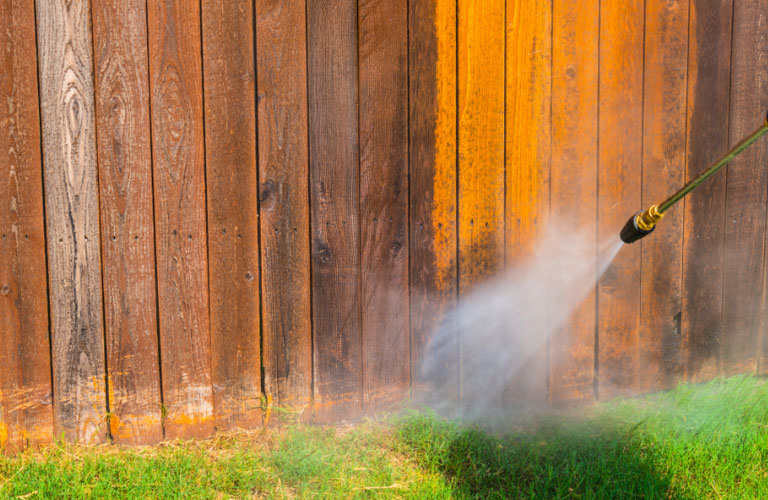

 Danny Wall


A fence that gets looked at twice a year lasts a lot longer than one that gets ignored until a panel comes down in a gale. Most of the jobs below take an afternoon. Skipping them is what turns a £30 fix into a £300 replacement.
This is a practical run-through of garden fence maintenance across the year: what to check, when to treat, and how to deal with the problems that actually come up.
The Quick Version
If you only do four things:
- Treat the timber every two to three years, or annually if the fence is exposed
- Keep soil and plants off the panels so they can dry out
- Check the posts at ground level twice a year, because that’s where fences fail
- Clear the green growth before it holds moisture against the wood
Fence Maintenance by Season
Different jobs suit different times of year. Treating timber in November is a waste of product, and pruning back growth in August means you’re working around nesting season and full foliage.
|
Season |
Job | Why then |
| Spring |
Dry, mild weather. Timber absorbs treatment properly |
|
|
Summer |
Cut back plants and climbers, top up treatment on exposed sections |
Growth is at its peak. Long dry spells for a second coat |
| Autumn |
Clear leaves from the base, check posts, tighten fixings |
Get it sound before winter weather hits |
| Winter | Inspect after storms, prop or brace anything loose |
Damage happens fast. Catching it early stops it spreading |
The single most useful habit is a walk along the fence line after every storm. Five minutes.
Spring: Clean and Treat
Spring is the main window for fence treatment. You need dry timber and a run of mild weather, ideally two or three days without rain either side of the job.
Cleaning the panels first
Treatment won’t soak in through a layer of moss and algae. Clean first.
- Brush off loose dirt and debris with a stiff brush
- Scrub green growth with a fence cleaner or a diluted solution, working with the grain
- Rinse off and let the timber dry fully, which usually means two dry days
If you’re using a pressure washer, keep it on a wide fan and stand well back. A narrow jet held close will chew into softwood and leave a furry surface that soaks up water for years afterwards. Plenty of fences have been ruined by someone being too thorough.
Treating the timber
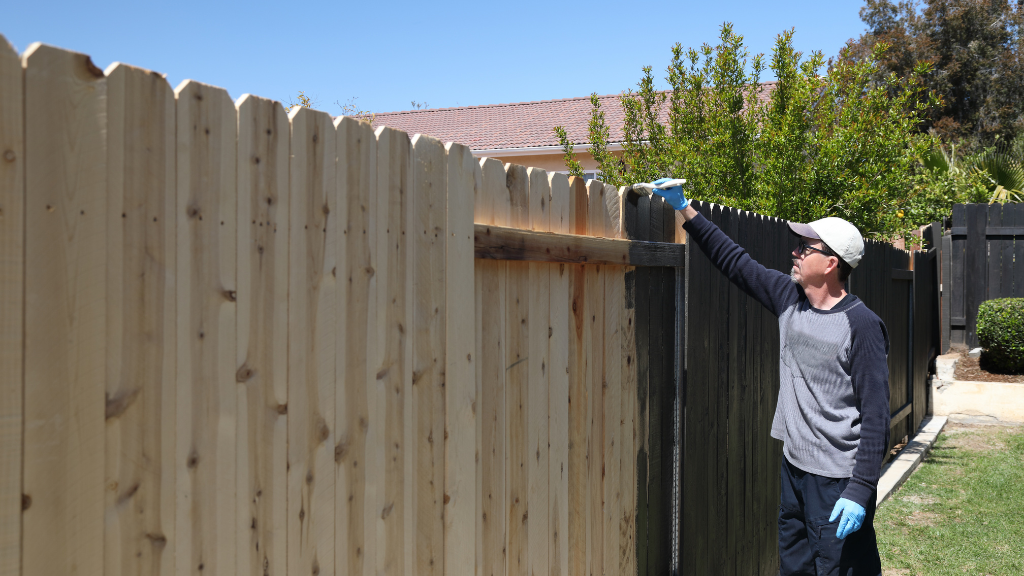
Once it’s clean and dry:
- Pressure-treated timber already has preservative driven into it, but it still benefits from a surface coat for water resistance and colour
- Untreated softwood needs a proper wood preserver, not just a coloured fence paint
- Cut ends are the weak spot. Any cut you make exposes untreated wood, so use a cut end preserver on every one
Work the treatment into the joints, the underside of rails, and anywhere two pieces of timber meet. Water sits in those places long after the face of the panel has dried.
How often? Two to three years for a sheltered fence. Annually if it’s south-facing, coastal, or takes the brunt of prevailing wind.
Dealing With Green Growth, Moss and Algae
Green film on a north-facing fence is normal. It isn’t rot, but it holds moisture against the timber and gives rot somewhere to start.
What works:
- A proprietary fence and patio cleaner, left to dwell as directed
- Stiff brush and elbow grease for light growth
- Improving airflow, which is usually the real fix
What causes it:
- Shrubs and hedges pressed against the panels
- Soil or bark chippings banked up against the base
- Fences in permanent shade with no air movement
Pulling a border back 200mm from the fence line does more for it than any product on a shelf. Air needs to move behind and around the panels.
Fence Posts: Where Fences Actually Fail
Panels rarely fail first. Posts do, and almost always at ground level, right at the point where wet soil meets air.
Why posts rot at the base
That’s the zone with constant moisture and constant oxygen. Timber below the water table stays sound for decades. Timber that’s alternately wet and dry, with air getting to it, breaks down fast.
Stopping it
- Use UC4 pressure-treated timber for anything going in the ground. It’s rated for ground contact. Standard treated timber is not
- Set posts in concrete with a slope away from the post, so water runs off rather than pooling in the collar
- Consider concrete posts if you’re replacing them anyway. They don’t rot, and timber panels drop straight into them
- Fit gravel boards at the base. They take the ground contact and the moisture instead of the panel, and a rotten gravel board is a cheap swap, though plain concrete gravel boards avoid the problem altogether
- Cap the posts. End grain drinks water. A post cap or a weathered top sheds it
Checking them
Give each post a firm push at shoulder height and a kick at the base. If there’s movement, or if a screwdriver sinks into the timber at ground level, that post is on borrowed time. Sound posts don’t give.
A post that’s rotted only at the base can often be saved with a concrete repair spur bolted alongside, rather than pulling the whole run apart.
Autumn and Winter: Storm Readiness
Autumn is the check-over. Winter is damage limitation.
Before the weather turns:
- Clear leaves and debris from the base of every panel
- Tighten or replace loose fixings, clips and brackets
- Check arris rails on closeboard fencing, since these carry the load and rot at the joints
- Cut back anything heavy leaning on the fence
After a storm:
- Walk the line and look for new movement in the posts
- Refix panels that have lifted in their clips before wind gets under them again
- Prop or brace anything leaning, rather than leaving it to work itself loose
A leaning fence puts strain on the posts either side of it. Left alone, one failure becomes three.
Choosing Timber That Lasts
Some of the maintenance burden is decided the day the fence goes up.
- Feather edge boards on a rail frame are the most repairable. Individual boards can be swapped without touching the rest
- Closeboard panels are sturdy but the arris rails are the weak point
- Pressure-treated softwood is the sensible default for most gardens
- Gravel boards are worth fitting whether the fence is new or not
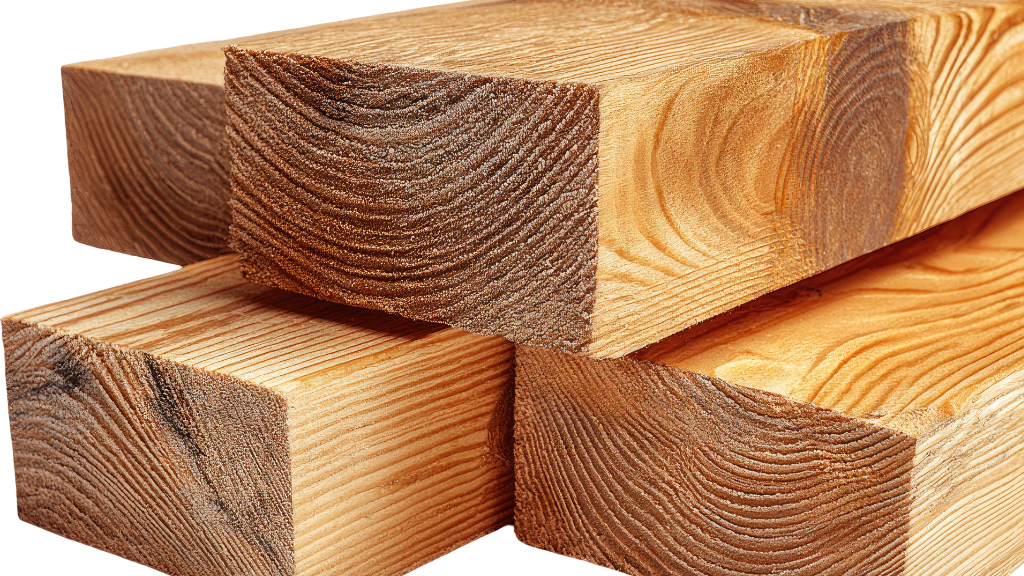
If you’re replacing sections, it’s worth getting the timber cut to size rather than trimming on site, because every cut you make in the garden is another untreated edge you’ll need to seal.
Frequently Asked Questions
How often should I treat a garden fence?
Every two to three years for a sheltered fence. Every year if it’s exposed to wind and rain or it’s sunny. If water no longer beads on the surface, it’s due.
What’s the best time of year to treat a fence?
Late spring or early summer. You want dry timber, mild temperatures, and no rain forecast for a couple of days.
Can I treat a fence in winter?
Not well. Cold timber and damp air stop the treatment penetrating properly, and you’ll get a surface film rather than protection.
How do I stop fence posts rotting?
Use UC4 ground-contact treated timber, slope the concrete away from the post so water runs off, fit gravel boards, and cap the tops. Rot starts at ground level, so that’s where the effort goes.
Do I need to clean my fence before treating it?
Yes. Treatment can’t soak through moss, algae or dirt. Clean it, let it dry fully, then treat.
Is fence paint the same as fence treatment?
No. Paint gives colour and some water resistance. A wood preserver goes into the timber and protects against rot and insect attack. On untreated wood you want the preserver.