
 19 Aug 2026
  8 min read

 Danny Wall


Three labels turn up on nearly every UK timber price list: sawn, regularised and PSE. They can all describe the same softwood off the same pack, and not one of them tells you what size the piece will be when it lands on your bench. Add PAR and CLS into the mix and it gets muddier again. Below is what each term means, what you actually get when you order it, and which one is needed for the job you’re going to be doing.
The short version
|
Term |
Stands for | What you get |
| Sawn | Rough sawn | Rough finish, close to full nominal size. Structural and hidden work |
| Regularised | Regularised carcassing | Machined to a consistent depth, eased edges. Joists and rafters |
| PAR / PSE | Planed All Round / Planed Square Edge |
Planed smooth on all four faces. Joinery and visible work |
There are two things worth knowing before you go any further: most UK merchants use PAR and PSE to mean the same product, and anything that has been through a planer comes out smaller than the size it is sold under.
What is PSE timber?
PSE stands for Planed Square Edge. It is rough sawn stock that has been run through a planer or a four-sided moulder until all four faces are smooth and the corners sit square at 90 degrees.
It is usually redwood or whitewood, kiln dried, and sold in standard lengths from 2.4m upwards. Because the machining has already been done at the mill, PSE arrives ready to fix, sand and finish. There is no thicknessing to do on site and no waiting for a workshop slot.
What PSE timber is used for
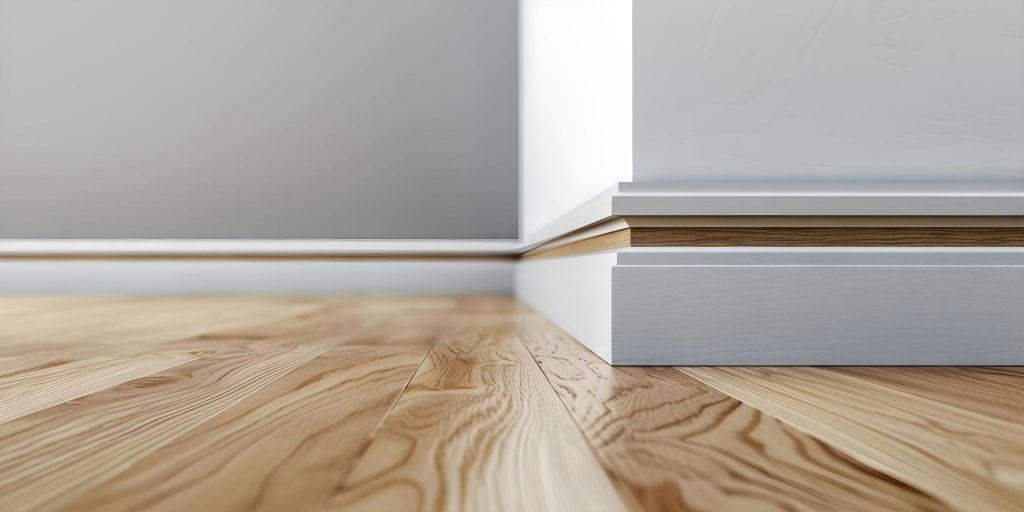
- Skirting and architrave
- Shelving and alcove work
- Door linings and casings
- Furniture, workbenches and shop fittings
- Internal trim where the face is on show
- Cladding battens where the edge is visible
The trade-off is cost. You pay more per metre than sawn, and what you are paying for is the machining and the consistency between lengths.
What is PAR timber, and is it different from PSE?
PAR stands for Planed All Round. It describes timber that has been planed smooth on every face, which is exactly what PSE describes as well. Here is the honest answer rather than the textbook one.
By the book, PSE has sharp square arrises and PAR may have slightly eased or pencil-rounded corners. In the yard, most UK merchants use the two terms for the same thing. There is even a regional habit to it: PSE is more common in England, PAR crops up more often in Scotland.
For most jobs it makes no difference. It starts to matter when:
- You are cutting tight mitres and a rounded edge leaves a visible line at the corner
- You are butting two pieces face to face and want no gap along the joint
- You are matching new trim to an existing run with sharp edges
If any of those apply, ask the merchant to confirm what the edge detail is before you order. The label alone will not always tell you.
What regularised timber means
Regularised timber is structural carcassing that has been machined so the depth stays consistent along the whole length, with the edges eased off.
On site that consistency is the whole point. Joists that vary by three or four millimetres between lengths give you a wavy floor deck and a lot of packing at the ceiling. Regularised stock lets you run level off the same batch without chasing your tail.
This is why merchants list carcassing as 47×100, 47×150, 47×175, 47×200 and 47×225. The 47mm comes from 50mm sawn stock with the machining taken off.
One point that often catches people out: regularising is about consistency, not smoothness. The finish is still a construction finish. It is not joinery stock and it will not take a coat of paint the way PSE will. Regularised carcassing is normally strength graded to C16 or C24 and is often pressure treated as well.
Regularised is not the same as CLS
- CLS stands for Canadian Lumber Standard and comes in fixed sections: 38×63, 38×89 and 38×140
- It is planed with rounded corners and aimed mainly at internal stud walls
- CLS-pattern timber is now produced across Sweden, Finland and the Baltics too, so the name tells you nothing about where it was cut
Why a 4×2 isn’t 4 inches by 2 inches
The size on the label is the nominal size, meaning the sawn size the piece started at. Planing takes roughly 3mm to 6mm off each dimension, so the finished section is always smaller.
This is where most ordering mistakes happen. Worth keeping this table to hand:
| Nominal (sawn) | Approx. PSE / PAR finished |
| 19mm | 15mm |
| 25mm | 21mm |
| 38mm | 34mm |
| 50mm | 45mm |
| 75mm | 70mm |
| 100mm | 95mm |
| 125mm | 120mm |
| 150mm | 145mm |
| 200mm | 195mm |
| 225mm | 220mm |
Treat those as a guide, not gospel. Finished sizes vary between mills and between merchants, so measure a piece or ask for the actual section before you cut a full run of anything.
For the imperial cross-reference: an old 4×2 is a 100×50 sawn, around 95×45 once planed, and 89×38 in CLS.
Which one to order for the job
| Job | Order this | Why |
| Floor joists, rafters, wall plates | Regularised C16 or C24 | Consistent depth, graded for load |
| Internal stud walls | CLS | Fixed sections, quick to fix out |
| Skirting, architrave, shelving | PSE / PAR | Smooth faces, ready to finish |
| Fence rails, sub-frames, formwork | Sawn | Cheapest option and the finish never shows |
| Garden furniture, planters, benches | Treated PSE / PAR | Easy on the hands, stands up outdoors |
Three things that catch people out
- Cutting treated timber
Pressure treatment soaks into an envelope around the outside of the section, not right through the middle. Every fresh cut, notch or drilled housing opens up untreated timber. Brush end grain preservative on before the piece goes in, especially on anything buried, bedded in concrete or sitting in contact with the ground.
- Planing graded timber down
If you machine a C16 or C24 section down to a smaller size, you have changed the graded dimension. The piece may no longer carry the load it was specified for. Order the finished section you need rather than reducing a structural member on site.
- Bringing joinery timber straight into a heated house
Kiln dried PSE still moves. Timber sitting in an unheated yard is carrying more moisture than the same piece will hold in a centrally heated room. Stack it flat in the room for a few days before you fix a run of skirting or make up shelving, otherwise the joints open up a fortnight later.
Getting the sizes right before you order

Work from finished sizes rather than nominal ones, and take a tape to a length before you commit to a full order. Where several pieces need to match, take them from the same batch so any variation between packs does not show up in the middle of a run.
If the tolerance really matters, get it cut at the merchant rather than on site. Skuma Timba cuts timber to size in branch, and delivers within 65 miles of Scunthorpe on its own vans, so anything cut to a set length arrives ready to fix.
Frequently asked questions
Is PSE timber the same as PAR timber?
In practice, yes. Most UK merchants use both terms for timber planed smooth on all four faces. The technical difference is that PSE has sharp square edges while PAR may have slightly eased corners, so check with the merchant if the job needs sharp arrises.
What size is PSE timber actually?
Around 3mm to 6mm smaller per dimension than the sawn size it is sold under. A 50×100 sold as PSE usually measures somewhere near 45×95, though it varies between suppliers.
Can you use PSE timber outdoors?
Only if it is treated. Untreated redwood or whitewood PSE will not last outside, and any cut ends need end grain preservative before they go in.
Is regularised timber stronger than sawn timber?
No. Regularising is a machining process, not a grading one. Strength comes from the C16 or C24 grade, and both sawn and regularised carcassing are available in either.
Why is PSE timber more expensive than sawn?
You are paying for the machining. Each face has been planed, which takes time, produces waste and gives you a consistent section that needs no further preparation before finishing.
What is PAR timber used for?
The same jobs as PSE: skirting, architrave, shelving, door linings, furniture and any internal work where the face is on show. Treated PAR also works outdoors for benches, planters and handrails where you want a smooth section to handle.