
 25 Feb 2026
  6 min read

 Danny Wall

Getting the right door lining or frame saves time on site and avoids costly callbacks. This guide covers everything you need to know about UK sizes, materials, fitting, and costs.
What’s the Difference Between Door Linings and Door Frames?
These terms get used interchangeably, but they’re not the same thing.
Door linings are for internal doors. They fit inside stud walls or partitions and don’t have a built-in rebate. You add the door stop separately.
Door frames are for external doors (or heavy-duty internal applications). They have a rebated edge for the door to close against and include a threshold or cill at the bottom.
Quick rule of thumb:
- Stud wall + internal door = lining
- Masonry opening or external door = frame
| Feature | Door Lining | Door Frame |
| Typical use | Internal doors | External doors |
| Wall type | Stud walls, partitions | Solid walls, masonry |
| Rebate | No (stop added separately) | Yes (built-in) |
| Threshold | No | Yes |
| Material | Softwood, MDF | Softwood, hardwood, composite |
Standard UK Door Lining Sizes
Internal door linings come in standard widths to match UK doors:
- 610mm (2ft)
- 686mm (2ft 3in)
- 762mm (2ft 6in)
- 838mm (2ft 9in)
- 926mm (3ft)
Standard height is 1981mm, though some go up to 2050mm for taller openings.
Lining thickness depends on your wall depth:
- 108mm for 100mm (3×2″) stud walls
- 132mm/133mm for 125mm (4×2″) stud walls
- 95mm, 120mm, 145mm, 200mm options for non-standard walls
Older properties often have odd-sized openings. Always measure before ordering.
Measuring for Door Linings
- Measure the wall thickness (not just stud depth) to get the right lining width
- Measure the structural opening height and width
- Allow for clearances:
- 2–3mm hanging side
- 3–4mm closing side
- 3mm at the head
- 6–10mm at the threshold for flooring
Buy slightly wider linings if you’re unsure. You can pack them out or plane them down.
Standard UK Door Frame Sizes (External)
External frames are sized to match standard UK external doors. Common configurations include:
- Single door frames
- Single door with fanlight (glazed panel above)
- Double door frames (French doors)
- Single or double doors with sidelights
Frame depth depends on wall construction:
- 70mm for timber frame builds
- 94mm or 107mm for brick/block walls
External frames must include weatherproofing: cills, weatherstripping, and proper drainage.
Door Lining and Frame Materials
Softwood is the most common choice. Affordable, easy to work with, takes paint well. Redwood and whitewood are standard for internal use.
Hardwood costs more but wears better in high-traffic areas. Oak, sapele, and meranti work well where you want a natural finish.
MDF is a budget option, usually pre-primed. Avoid it in bathrooms or anywhere prone to moisture.
Composite/uPVC needs minimal maintenance and resists rot. Typically used for external applications.
For external frames or damp-prone areas, always specify treated timber.
Components of a Door Lining and Frame
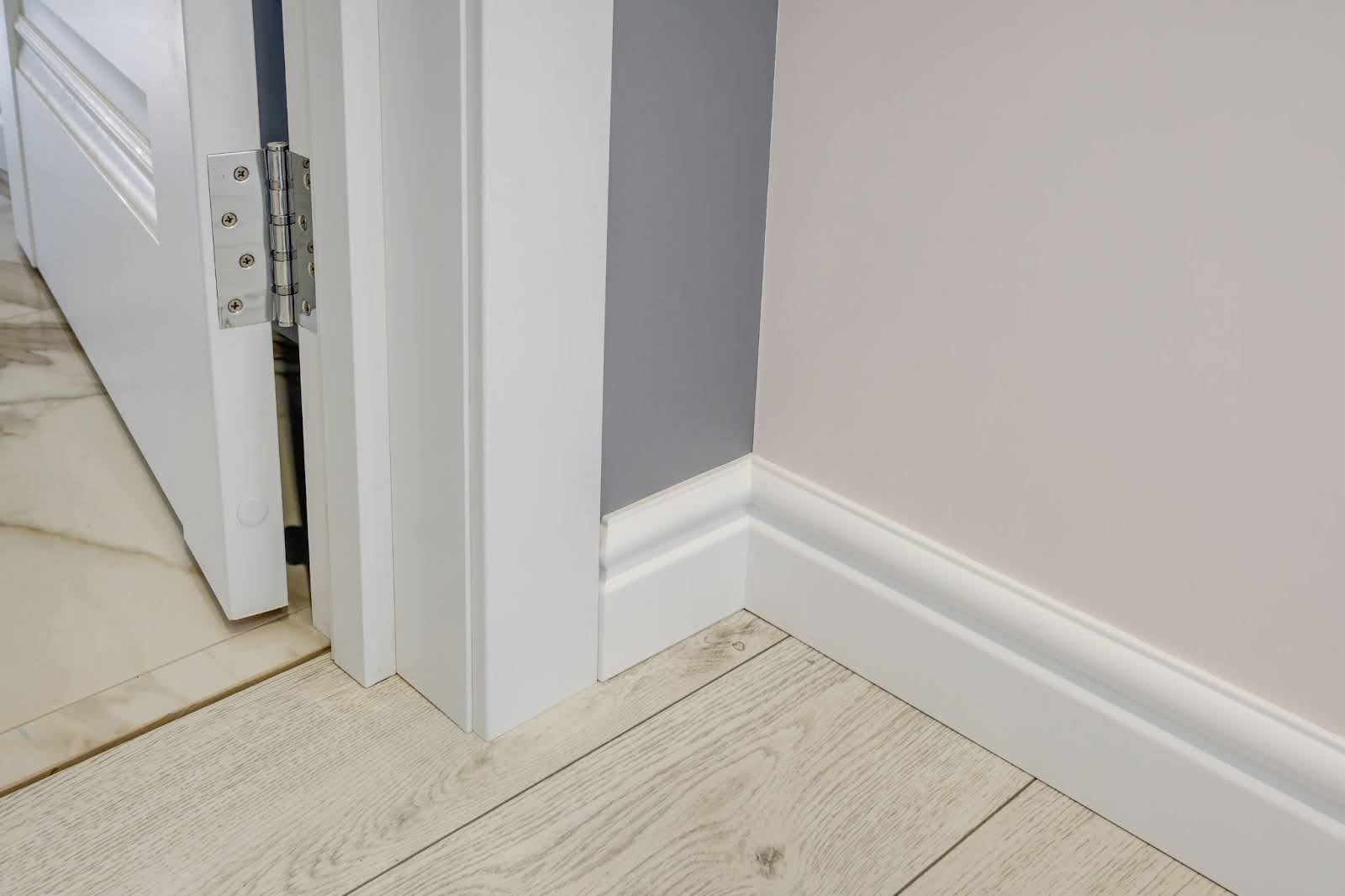
Every lining or frame has these parts:
- Head: The horizontal top piece
- Jambs/Legs: The two vertical side pieces
- Door stop: The strip the door closes against (separate on linings, built into frames)
- Cill/Threshold: Bottom piece on external frames for weather sealing
- Architrave: Decorative trim covering the gap between the lining and the wall (fitted after the lining)
Lining sets usually arrive flat-packed and need to be assembled on site.
How to Fit a Door Lining
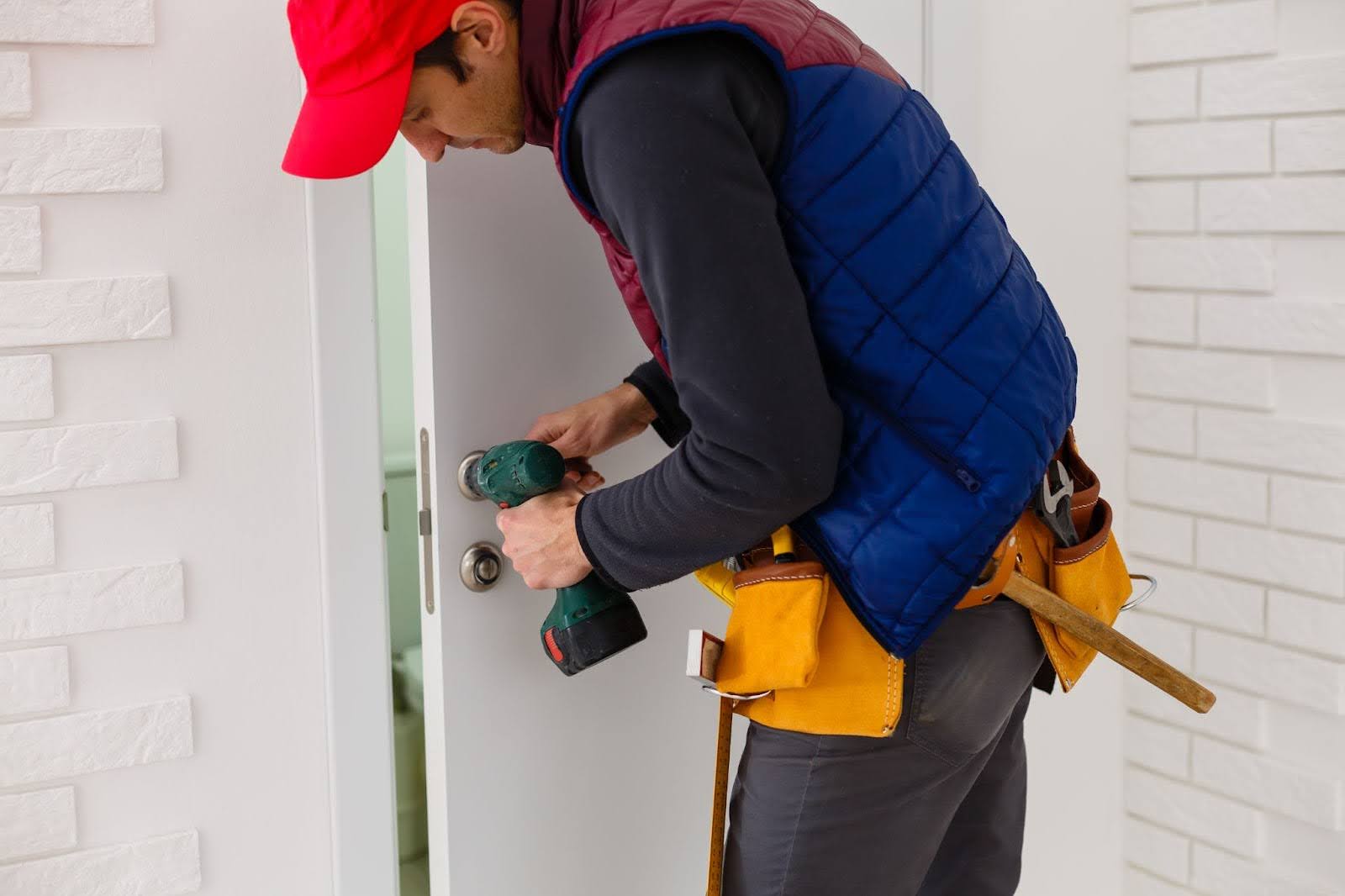
This is a moderate difficulty job. A seasoned chippy can do it in 2–3 hours. DIYers should allow half a day.
Tools needed:
- Spirit level
- Drill/driver
- 75mm+ screws
- Packers/shims
- Tape measure
- Saw (if trimming)
Step-by-Step Installation
- Check the structural opening is square and plumb
- Assemble the lining set (head to jambs)
- Brace across the bottom to hold the correct width
- Position in the opening, flush with the wall face
- Check plumb on both jambs and level on the head
- Insert packers at hinge and latch positions (three points per jamb minimum)
- Fix through the lining into the studs, pre-drilling to avoid splits
- Check plumb and square again before removing the brace
- Fit the door stop
- Hang the door
- Fit the architrave to finish
Common Mistakes
- Not checking for a square before fixing
- Skimping on packers (causes bowing)
- Fixing too close to the edge (splits the timber)
- Forgetting to check the width at the top and bottom
How to Fit an External Door Frame
External frames take longer (4–5 hours minimum) and need more care.
Important: External door installation is a controlled fitting under UK Building Regulations. Either notify Building Control or use a Competent Person Scheme installer (FENSA, Certass).
Key considerations:
- Fix securely to masonry with frame fixings or bolts
- Seal the cill properly and ensure it slopes away for drainage
- Use expanding foam sparingly to avoid bowing
- Check frame compatibility with your door (rebate depth, hinge positions)
Pocket Door Frame Installation
Pocket doors slide into the wall instead of swinging. They save floor space in tight areas like en-suites, cloakrooms, and walk-in wardrobes.
UK pocket door systems include:
- Eclisse (hidden fixings)
- Rocket Pocket (DIY-friendly steel cassette)
- Scrigno (self-assembly)
- JB Kind (pre-assembled timber cassette)
Things to know:
- Only works in non-load-bearing walls (or with proper reinforcement)
- Finished wall thickness is typically 125mm
- Studwork must be dead level and plumb
- You can’t run wiring or plumbing through the pocket cavity
- Repairs mean opening up the wall
Door Frame and Fitting Costs (UK)
Material Costs
| Item | Price Range |
| Internal softwood lining set | £60–£225 |
| Internal hardwood lining | £60–£800+ |
| External softwood frame | £80–£200 |
| External hardwood frame | £150–£400+ |
Labour Costs
| Job | Price Range |
| Internal lining fitting | £80–£200 (2–3 hours) |
| External frame fitting | £150–£400 (4–5 hours) |
| Door hanging only | £50–£100 per door |
London and major cities typically add 20–30% to these rates.
Prices based on 2024–2025 UK averages.
Choosing the Right Option
Internal doors: Match lining thickness to wall depth. Softwood works for painted finishes. Hardwood suits natural finishes.
External doors: Always use a rebated frame with cill. Specify treated timber or composite.
High-traffic areas: Hardwood linings wear better.
Bathrooms: Avoid MDF. Use treated softwood.
Period properties: Measure carefully. Expect non-standard sizes.
FAQs about Door Linings and Frames
What’s the difference between a door lining and a door casing?
They are the same thing. Some suppliers use “casing” for pre-finished options.
Can I fit a door lining myself?
Yes, with basic DIY skills and the right tools. External frames are trickier and may need Building Control sign-off.
How long does it take to fit a door lining?
2–3 hours for a tradesperson. Half a day for DIYers tackling their first one.
Do I need a door frame or a door lining?
Lining for internal doors in stud walls. Frame for external doors or solid masonry walls.
What size door lining do I need for a 100mm stud wall?
108mm. This allows for plasterboard on each side, plus minor wall variation.
Get It Right First Time
Choosing the correct lining or frame before you start saves time and prevents problems down the line. Measure your wall thickness, check your opening dimensions, and pick materials suited to the location.
For timber linings, door frames, and softwood or hardwood options, contact us to speak to a timber merchant who knows the trade or visit us in store.