
 24 Feb 2026
  11 min read


 Danny Wall
A wooden deck is only as good as the care you put into it. In the UK, that matters more than most places. The combination of heavy rain, frost, damp winters and bursts of summer sun puts timber through its paces year after year. Without regular attention, boards grey out, algae takes hold, fixings corrode and rot creeps in. Most of that is preventable with a simple routine.
This guide covers everything you need to know about looking after wooden decking in the UK: how to clean it properly, how to protect your timber with oil or stain, what to do each season, and the common mistakes that shorten a deck’s life. It’s written for anyone with a timber deck, whether you’re a tradesperson maintaining a client’s build or a homeowner wanting to get the most out of your garden.
Why Wooden Decking Needs Regular Maintenance in the UK
Leave a timber deck unattended for a couple of years, and you’ll see the results: grey, weathered boards, green algae making the surface slippery, loose screws, and soft spots where rot has started to set in. It becomes a safety hazard as much as an eyesore.
Most timber decking in the UK is built with pressure-treated softwood, typically Scandinavian redwood or spruce. The pressure treatment helps protect against rot and insect damage, but it won’t stop the surface from greying, cracking or growing moss. That part is down to you.
A well-maintained timber deck can last 15 to 30 years. But if it’s neglected, you might have to wait five to ten years before it needs replacing. Regular care doesn’t take long, and it saves money in the long run.
What You’ll Need
Before you start, gather your kit. Most of these costs under £50 if you already own a drill and a decent brush.
- Stiff-bristled broom or brush
- Specialist timber decking cleaner (not bleach)
- Pressure washer (optional, with caveats)
- Medium-grit sandpaper (80–120 grit) or orbital sander
- Decking oil or decking stain
- Wide paintbrush or applicator pad
- Screwdriver or drill for tightening loose fixings
- Replacement boards (if any are damaged)
How to Clean a Wooden Deck: Step by Step
Cleaning is the foundation of all decking maintenance. If you do this part properly, everything that follows goes more smoothly.
1. Clear the deck
Move all furniture, planters, pots and ornaments off the surface. Check underneath items for trapped moisture, early mould or discolouration. These are the spots that cause problems if left.
2. Sweep the whole surface
Use a stiff broom to clear leaves, dirt and loose debris. Pay close attention to the gaps between boards. Organic matter stuck in those grooves holds moisture and feeds algae growth.
3. Apply a decking cleaner
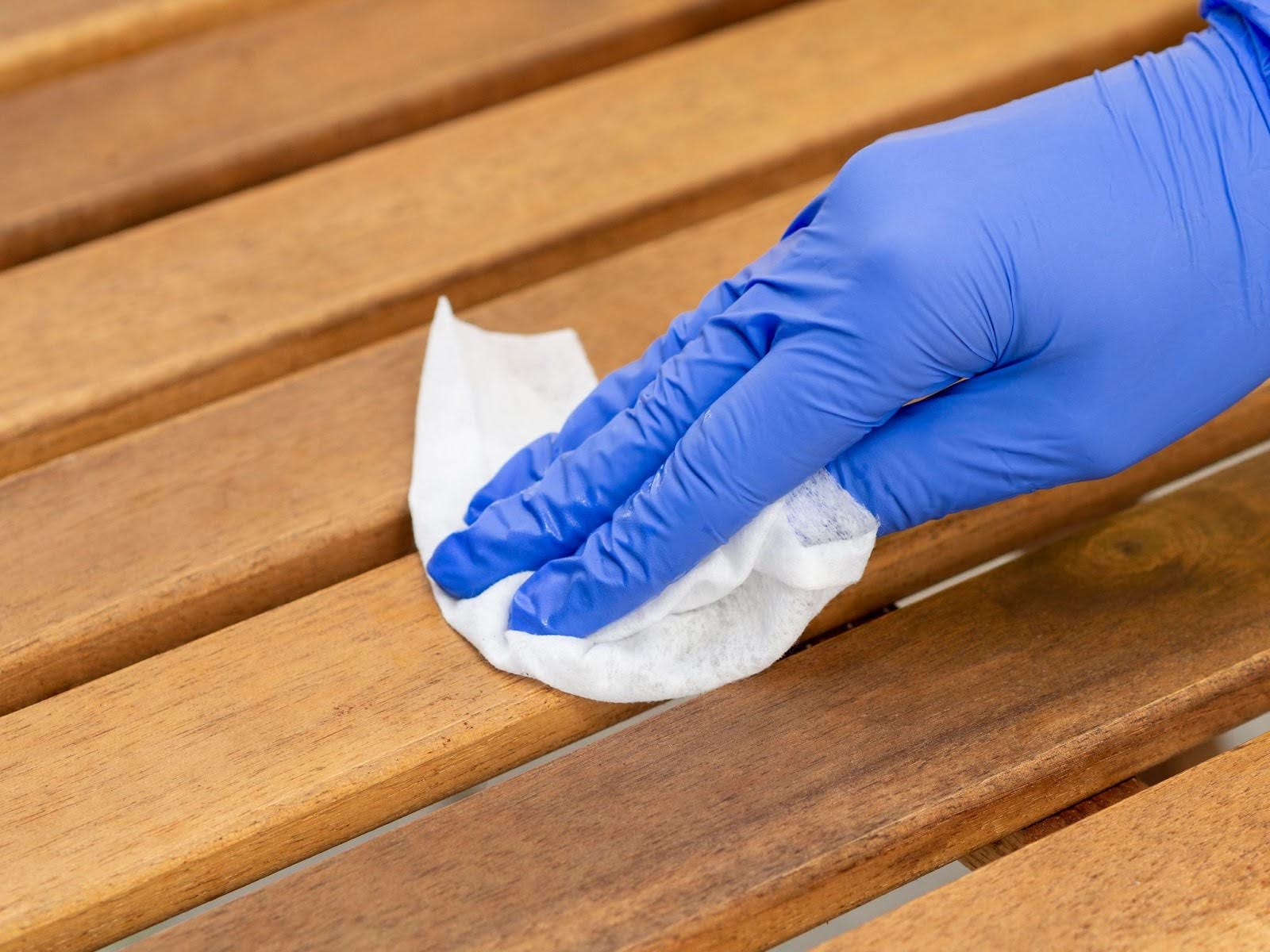
Use a purpose-made timber cleaner. Do not use chlorine bleach. It destroys the wood’s cell structure and strips its colour. Cover any nearby plants and grass before you apply the cleaner.
4. Scrub along the grain
Work a stiff-bristled brush along the length of the boards, always following the grain. Never scrub across it, or you’ll rough up the wood fibres. Let the cleaner sit for 15 to 20 minutes before scrubbing.
5. Rinse thoroughly
Use a garden hose or a pressure washer on a low setting. If you’re using a pressure washer, keep the nozzle at least 15 to 20cm away and use a wide fan tip. Keep it moving at all times. Never hold it in one spot.
Important: If mould is present, treat it with a mould remover first. Pressure washing alone can spread the spores and make the problem worse.
6. Let the deck dry fully
This step gets skipped too often. Timber needs to be bone dry before you apply any oil or stain. Allow at least 48 hours of dry weather. Rushing this traps moisture under the treatment and causes problems down the line.
Decking Oil vs Decking Stain: Which One?
This is one of the most common questions. Both decking oil and wood stain protect timber, but they work differently. Here’s how they compare:
| Decking Oil | Decking Stain | |
| How it works | Soaks into the grain and nourishes the wood from the inside | Sits on the surface and seals the timber |
| Finish | Natural wood look brings out the grain | A range of colour options, covering the grain |
| Slip risk | Lower: absorbs into the wood rather than sitting on top | Higher when wet: forms a layer on the surface |
| Upkeep | Easy touch-ups, reapply once a year | Can peel or flake if not kept up |
| Best for | Softwood decking where you want a natural finish | Older decking that needs a colour refresh |
One thing to note: you can’t apply oil over an existing stain. You’d need to strip the old finish first. So it’s worth deciding which route you’re going down before you start.
Most tradespeople working with UK softwood decking go with oil. It’s easier to maintain year on year, less likely to peel in damp conditions, and keeps the wood looking natural. If you’d rather skip the annual oiling altogether, composite decking is worth a look. It needs far less upkeep than timber, though it comes at a higher upfront cost.
How to Oil or Stain Your Deck
Once the deck is clean and fully dry, you’re ready to protect it. This is the process to follow:
- Sand any rough or splintered areas with 80 to 120 grit sandpaper. Wear a dust mask, especially if the timber is pressure-treated.
- Check all fixings. Tighten any loose screws and replace corroded ones with stainless steel decking screws.
- Stir the oil or stain thoroughly. Don’t shake it. If you’re using more than one tin, pour them together and mix for a consistent colour.
- Apply with a wide brush or applicator pad, working along the grain. Do three to four boards at a time to avoid overlap marks.
- Start at the far end and work towards your exit. Nobody wants to be stranded on a wet deck for four hours.
- Let the first coat dry for at least four hours, then apply a second coat the same way.
- Allow 24 to 48 hours of drying time before putting furniture back.
Timing tip: Treat your deck when daytime temperatures are consistently above 8°C, and there’s no rain forecast for at least two days. In the UK, that usually means late April through to early October. Avoid very hot days too. If the oil dries too fast, it won’t soak in properly.
A Note on New Decking
If your decking is brand new and came pre-treated (you’ll notice a green or brown tinge), don’t oil or stain it straight away. The factory treatment needs time to weather and erode before any new product can absorb properly.
Give it around six months, then clean it with a timber cleaner and treat it as normal. You can also apply an end-grain protector to the cut ends of boards. That’s where moisture creeps in first, and it’s one of the main causes of splitting.
Seasonal Decking Care: A UK Calendar
The British climate doesn’t let up, and neither should your maintenance routine. This is what to do throughout the year.
Spring (March to May)
This is when you do the heavy lifting. Spring is the time for your annual deep clean and re-oil.
- Inspect every board. Look for frost damage, splits, soft spots or warping after winter.
- Check underneath the deck. Look for standing water, blocked drainage or debris trapping moisture against the joists. Poor airflow under the boards is one of the biggest causes of rot in UK decking.
- Replace any rotten or damaged boards before treating.
- Tighten loose screws and replace any that have corroded.
- Clean, dry and apply oil or stain once temperatures are reliably above 8°C.
Summer (June to August)
The easy season. Your deck is treated and ready to use. Just keep on top of the basics.
- Sweep regularly and clean up spills quickly. BBQ grease is the worst offender. It stains the wood and attracts pests.
- Put protective pads or caps under chair and table legs to prevent scratching.
- Move planters and rugs around regularly. Leaving them in one spot traps moisture and causes uneven fading.
- South-facing decks that get a lot of sun may benefit from a light top-up coat of oil mid-summer if the boards look dry.
Autumn (September to November)
Falling leaves are the number one enemy during autumn. Wet leaves sitting on timber create ideal conditions for mould and algae.
- Sweep the deck at least once a week during leaf fall.
- Clear debris from the gaps between boards and check that drainage channels are open.
- If the deck has taken a battering over summer (lots of foot traffic, BBQs, parties), consider a second clean.
- Early autumn is your last chance to apply a protective coat before the weather turns. If you missed spring, do it now.
Winter (December to February)
You’re not going to be doing heavy maintenance in winter. The aim is just to keep things tidy and avoid making problems worse.
- Keep clearing leaves and debris. Even in winter, organic matter holds moisture.
- Brush off snow where you can. Use a plastic shovel or broom, never metal.
- Don’t use salt or chemical de-icers on wooden decking. They speed up deterioration and can damage the timber.
- If any boards feel soft or spongy underfoot, mark them for replacement in spring.
Common Mistakes That Damage Wooden Decking
These are the errors that come up time and again. Avoid them, and your deck will last years longer.
Using chlorine bleach to clean – It strips the wood’s colour and damages its structure at a cellular level. Stick to a proper timber cleaner.
Pressure washing on full power – Too much pressure tears up the grain and causes furring on the surface. Use a wide nozzle, low setting, and keep it moving.
Oiling or staining wet timber – The treatment can’t absorb into damp wood. You end up trapping moisture underneath, which causes the very rot you’re trying to prevent. Wait for 48 hours of dry weather after cleaning.
Painting a timber deck – Paint can’t cope with foot traffic on a horizontal surface. It peels, cracks and looks rough within a season. Oil or stain is the way to go.
Assuming pressure-treated boards are maintenance-free – The treatment protects against rot and insects, but it won’t stop UV greying, surface cracking or moss growth. Regular cleaning and oiling are still needed.
Ignoring what’s underneath – Blocked drainage, poor ventilation and debris trapped under the deck cause more damage than anything that happens on the surface. Check your substructure at least once a year.

When to Replace Boards Instead of Repairing
When you do replace boards, match the timber type and thickness to what’s already there. Make sure any new boards are treated with a wood preservative on all sides, including the cut ends, before fitting.
Looking for replacement composite decking boards or timber cut to size for your project? Skuma Timba stocks a full range of treated softwood decking and can cut to your specifications in the branch. Check what’s in stock or speak to the team for advice.
Frequently Asked Questions
Is it better to stain or oil a deck?
Oil is the better choice for most UK softwood decking. It soaks into the grain, nourishes the wood and is straightforward to maintain. Stain gives you more colour options but sits on the surface, which means it can peel or flake in damp conditions. Oil also tends to be less slippery when wet, which matters in the UK.
How often should I treat my decking?
At least once a year. A full clean and re-oil each spring is the standard recommendation. South-facing decks that cop more sun may need a top-up mid-summer. Decks in shaded or damp areas might need extra attention to keep mould at bay.
Do I need to seal my deck every year?
If you want it to last, yes. The UK climate is hard on exposed timber. Annual treatment with oil or stain keeps moisture out, prevents greying and stops the wood drying out and splitting.
Does pressure-treated decking still need maintenance?
It does. Pressure treatment protects against rot and insect damage, but it won’t prevent UV greying, surface cracking or moss growth. You still need to clean and oil it on a regular basis.
Can I pressure wash my decking?
You can, but take care. Use a wide fan nozzle on a low setting, keep the nozzle at least 15 to 20cm away, and always sweep along the grain. If mould is present, treat it with a cleaner first. Pressure washing alone can spread mould spores across the surface.
Timber decking is one of the most popular additions to UK gardens, and with the right care, it’ll serve you well for decades. A couple of hours each spring and a bit of attention throughout the year is all it takes. Keep on top of it, and you’ll save yourself the cost and hassle of a full replacement down the line. Need decking boards, oil or advice on the right timber for your project? Get in touch with the team, and we’ll point you in the right direction.